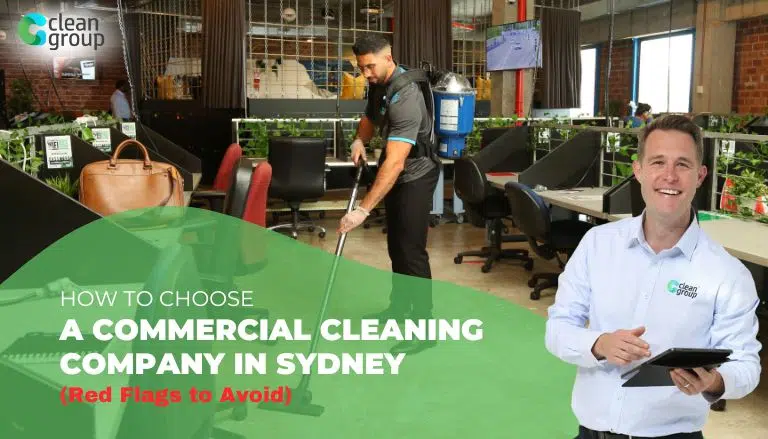
Choosing the wrong cleaning company doesn’t just mean paying for poor service. It can mean damaged property, security breaches, failed inspections, and in worst cases, legal liability when uninsured contractors get hurt on your property.
We’ve seen businesses make expensive mistakes with cleaning companies—hiring the cheapest quote only to discover they’re uninsured, bringing in “professionals” who don’t show up half the time, or signing contracts with hidden fees that make that low price suddenly not so low.
This guide will help you avoid those mistakes. We’ll cover the essential questions to ask, the red flags that should send you running, and what actually separates quality cleaning companies from cowboys with a mop.
Why This Decision Actually Matters
Before we dive into the how-to, let’s talk about why getting this right is crucial.
Your Business Image First impressions count. Clients walking into a grubby office, potential employees seeing grimy bathrooms during interviews, or customers noticing dusty shelves all shape how people perceive your business. Professional cleaning maintains the image you’ve worked hard to build.
Staff Health and Productivity Poor cleaning means dust, allergens, germs, and general griminess that make people sick. More sick days, lower morale, and reduced productivity all have real costs. A study found that properly cleaned offices see 20-30% fewer sick days.
Asset Protection That office fitout cost you tens of thousands. Quality cleaning extends the life of carpets, furniture, and equipment. Poor cleaning—or using the wrong products—can actually damage your assets, costing you money in premature replacements.
Compliance and Safety Depending on your industry, you might have specific cleaning and hygiene requirements. Medical practices, childcare centres, gyms, food businesses—all have regulations you must meet. The wrong cleaning company can put you at risk of non-compliance.
Security You’re giving cleaners access to your premises, often after hours and alone. They’ll be around your computers, documents, and valuable equipment. Choosing a company that doesn’t properly vet staff is a security risk you can’t afford.
The 12 Questions You Must Ask
Before signing anything, get clear answers to these questions. Vague responses or refusal to answer? Walk away.
1. Are You Fully Insured?
This is non-negotiable. Every legitimate cleaning company should have:
Public Liability Insurance Minimum $10-20 million coverage. This protects you if their staff damage your property or if someone gets injured because of their work.
Workers Compensation Insurance If their cleaner slips and breaks their wrist in your office, workers comp covers them. Without it, you could be liable for their medical costs and lost wages.
What to Actually Verify Don’t just take their word. Ask for a current certificate of currency from their insurer. Check the dates—expired insurance is useless. If they hesitate or can’t provide this immediately, they’re either not insured or hiding something.
2. What’s Included in Your Standard Service?
“We clean everything!” sounds good but means nothing. You need specifics.
A professional company will provide a detailed scope of work listing:
- Exactly which areas are cleaned
- How often each task is performed
- What’s included vs what costs extra
- Specific tasks (vacuum, mop, dust, sanitise, etc.)
Get this in writing. Verbal agreements lead to “But I thought you were doing…” arguments later.
3. Do You Supply Your Own Equipment and Products?
Most professional companies supply everything—equipment, products, and consumables. This is usually included in your quote.
Why This Matters Commercial cleaning products are far more effective than supermarket cleaners. Professional equipment (commercial vacuums, floor scrubbers) does a better job faster. If they’re asking to use your supplies, question whether they’re actually set up for commercial work.
Eco-Friendly Options If environmental responsibility matters to your business, ask about eco-friendly product options. Most reputable companies now offer plant-based, low-VOC products that work just as well as harsh chemicals.
4. Are Your Cleaners Employed or Subcontracted?
This matters more than you might think.
Employed Staff The company directly employs cleaners. They’re responsible for training, supervision, insurance, and quality control. There’s accountability.
Subcontractors The company farms out work to independent contractors. Less control over quality and consistency. Often means different cleaners each time. Insurance and liability can be murky.
What You Want Directly employed staff or very carefully managed subcontractors with proper insurance and vetting. You should get the same cleaners consistently, not random different people each week.
5. What Are Your Quality Control Measures?
Anyone can send cleaners to your office. Professional companies ensure those cleaners actually do the job properly.
Look for:
- Regular inspections by supervisors
- Feedback mechanisms (how do you report issues?)
- Performance monitoring systems
- Clear complaint resolution process
- Quality guarantees
If their answer is basically “our cleaners are good, don’t worry,” that’s not quality control. That’s hope.
6. Can You Provide References from Similar Businesses?
Every established cleaning company has happy clients willing to give references. If they can’t provide three current references, why not?
How to Actually Check References Don’t just ask “Are they good?” Ask specific questions:
- How long have they been cleaning for you?
- Have there been any issues? How were they handled?
- Are they reliable and consistent?
- Would you hire them again?
- Any complaints or concerns?
Be wary if all references are from years ago or if the company refuses to provide recent references.
7. What Happens If We’re Not Satisfied?
Things sometimes go wrong. What matters is how the company handles it.
Professional Response A quality company will have a clear process: report the issue, they’ll investigate, they’ll make it right, and if they can’t fix it there’s a clear escalation path.
Warning Signs Companies that get defensive about this question or claim “we never have complaints” (nobody’s perfect). You want a company confident enough to have a proper complaint resolution process.
8. Are You Flexible with Scheduling?
Your business needs might change. Can they adapt?
Questions to Ask:
- Can we increase/decrease service frequency?
- Do you offer after-hours or weekend cleaning?
- What if we need an emergency clean?
- Can you handle one-off deep cleans?
- What notice do you need for changes?
Inflexible companies that only work 9-5 Monday-Friday often don’t suit commercial clients who need cleaning outside business hours.
9. What Certifications and Training Do Your Staff Have?
Professional cleaning isn’t just about knowing how to use a mop. It requires proper training.
Look For:
- Industry certifications (BSCAA membership, ISO certification)
- Staff training programs
- WHS compliance training
- Specialised cleaning certifications (medical cleaning, childcare, etc.)
- Police checks (if appropriate for your industry)
If they can’t articulate their training processes or don’t see value in certifications, they’re probably winging it.
10. How Do You Handle Staff Turnover?
Cleaning industry turnover can be high. How does the company ensure consistency?
What You Want to Hear:
- Thorough training for new staff
- Backup cleaners available if regular staff are sick
- Consistent quality despite staff changes
- Long-term staff retention strategies
Red Flag: “We’ll send whoever’s available” means different cleaners every week with no continuity or familiarity with your space.
11. What’s Your Pricing Structure?
Transparent pricing builds trust. Hidden fees destroy it.
Get Clear On:
- Exactly what’s included in the quoted price
- How pricing is calculated (hourly, per clean, square metreage?)
- Contract minimum term
- Notice period for cancellation
- Price increase policy
- Extra charges (what costs additional?)
- Payment terms and schedule
If the quote is vague or the company won’t break down pricing, that’s a problem.
12. Do You Have Experience with Our Industry?
Different businesses have different needs. A company experienced in your industry understands those needs without lengthy explanations.
Medical Practices: Infection control, medical waste, compliance with health regulations
Childcare Centres: Child-safe products, toy sanitisation, NSW childcare regulations
Gyms: High-frequency cleaning, locker rooms, equipment sanitisation
Offices: After-hours access, security protocols, workspace cleanliness standards
Industry-specific experience means fewer mistakes and better results from day one.
Red Flags: Run Away From These
These warning signs should make you seriously reconsider or outright eliminate a company from consideration.
🚩 No Insurance or Can’t Prove It
Biggest red flag of all. No insurance means if anything goes wrong, you’re liable. Their cleaner gets hurt? You’re potentially paying. They damage your expensive equipment? You’re wearing the cost.
Reality Check Any company that “definitely has insurance” but can’t immediately provide a current certificate is lying. Insurance certificates take 30 seconds to email. No certificate = no insurance.
🚩 Suspiciously Low Prices
If one quote is 40-50% cheaper than everyone else, something’s wrong.
What They’re Cutting:
- Insurance (probably not insured)
- Staff training (untrained, inexperienced cleaners)
- Quality products (cheap or inadequate supplies)
- Time (rushing through your space inadequately)
- Tax and super (paying workers cash under the table)
- Equipment (using old or insufficient gear)
The “cheapest” quote often becomes the most expensive when you factor in poor results, damage, or legal liability.
True Story Example A Sydney law firm hired the cheapest quote to save money. Three months in, they discovered the cleaners weren’t insured. One cleaner slipped, broke their ankle, and sued the law firm directly for medical costs and lost wages. The $500/month they were “saving” cost them over $30,000 in legal fees and compensation.
🚩 No Written Contract or Agreement
Any legitimate business operates on contracts. This protects both parties.
What Should Be in Writing:
- Exact services provided
- Frequency and schedule
- Pricing and payment terms
- Contract duration and termination clauses
- Insurance details
- Complaint procedures
- Quality standards
If they say “we can just do a handshake deal” or “we don’t need all that paperwork,” they’re either unprofessional or planning to not honour verbal promises.
🚩 Can’t or Won’t Provide References
Every established cleaning company has satisfied clients. If they can’t name three, there’s a reason.
Excuses to Be Wary Of:
- “All our clients are confidential” (then they can ask permission)
- “We’re new so we don’t have many yet” (how new? Everyone starts somewhere, but zero references is concerning)
- “You can check our Google reviews” (online reviews are fine, but speaking to actual clients is better)
No references = no track record of satisfied customers = risky hire.
🚩 Pressure Tactics and Pushy Sales
“Sign today and get 20% off!” “This deal expires in an hour!” “We’ve got another client interested in your slot!”
These are sales manipulation tactics. Professional companies confident in their service don’t need to pressure you. They’re happy to give you time to decide and compare options.
Real professionals provide information, answer questions, and let you make an informed decision without pressure.
🚩 Vague or Unclear Service Descriptions
“We’ll make your office spotless!” “We clean everything!” “Full commercial cleaning service!”
These mean nothing. What exactly are they cleaning? How often? What’s “spotless” mean to them?
Professional companies provide detailed checklists. They specify which rooms, which tasks, which frequency. There’s no ambiguity.
🚩 Poor Communication Before Hiring
If they’re hard to reach, slow to respond, or vague in their answers before you’ve hired them, it’ll only get worse after.
Warning Signs:
- Take days to respond to simple questions
- Miss scheduled calls or meetings
- Provide different information each time you talk
- Can’t give straight answers
Communication problems before hiring = communication problems ongoing. You’ll be chasing them constantly.
🚩 No Physical Office or Local Presence
Post office box only? Mobile phone with no business address? Can’t visit their office?
Why This Matters Established businesses have physical premises. It shows stability and legitimacy. Fly-by-night operators use PO boxes and mobiles because they’ll disappear when complaints pile up.
Google their business address. If it’s a residential address or doesn’t exist, be very cautious.
🚩 Using Consumer-Grade Products
If they show up with Windex and a supermarket mop, they’re not commercial cleaners.
Commercial cleaning requires commercial-grade products—stronger formulations, better equipment, professional supplies. Consumer products don’t cut it for commercial environments.
This isn’t a deal-breaker for small operations, but for proper commercial work, they need proper equipment.
🚩 No Quality Control System
“Just call if there’s a problem” isn’t a quality control system.
Professional companies:
- Regularly inspect work
- Have supervisors check quality
- Use checklists and systems
- Proactively identify issues
- Track performance metrics
If there’s no systematic approach to ensuring quality, you’re relying on luck.
🚩 High Staff Turnover They Can’t Explain
Different cleaners every week? Can’t keep staff for more than a few months?
High turnover means:
- Poor working conditions
- Low pay leading to unmotivated staff
- No consistency in your service
- Constant retraining
- Quality suffers
Good cleaning companies retain staff by treating them well. Low turnover means consistent service for you.
🚩 Inflexible and Won’t Customise
“This is our standard package, take it or leave it.”
Professional companies understand every business is different. They’ll tailor services to your specific needs, not force you into a one-size-fits-all package.
Rigidity suggests they’re more interested in easy money than actually solving your cleaning needs.
Green Flags: What Good Companies Do
Now let’s flip it. Here’s what quality cleaning companies actually look like.
✅ Transparent, Detailed Quotes
Professional quotes break everything down:
- Itemised services
- Clear pricing for each component
- What’s included vs additional
- Payment terms clearly stated
- No surprises or hidden costs
You understand exactly what you’re getting and what it costs.
✅ Professional Site Assessment
Quality companies want to see your space before quoting. They’ll:
- Visit your premises
- Ask about your specific needs
- Identify potential challenges
- Provide tailored recommendations
- Give accurate pricing based on actual requirements
Anyone quoting over the phone without seeing your space is guessing. Guesses lead to disputes later.
✅ Clear Communication Protocols
From day one, you know:
- Who your main contact is
- How to report issues
- Response time expectations
- When you’ll hear from them
- How to escalate if needed
Communication is clear, consistent, and professional.
✅ Comprehensive Written Agreement
Everything’s in writing. Both parties know exactly what’s expected. Terms are clear. Process is professional.
This protects both of you and prevents misunderstandings.
✅ Proven Track Record
Years in business (five-plus ideally), established client base, positive reviews, and industry recognition all indicate stability and reliability.
Check Google reviews, but also ask for references. Successful companies have both.
✅ Proper Credentials
Current insurance certificates provided without hesitation. Industry certifications. Staff training documentation. Safety compliance records.
Everything’s above board and properly documented.
✅ Quality Products and Equipment
Commercial-grade supplies. Well-maintained equipment. Eco-friendly options available. They invest in the right tools for professional results.
✅ Professional, Trained Staff
Background checks completed. Proper training provided. Staff are uniformed and identifiable. They’re respectful, reliable, and take pride in their work.
You feel confident having them in your space.
✅ Flexibility and Responsiveness
They adapt to your changing needs. Can handle special requests. Available for emergency cleans. Adjust frequency as your business grows or changes.
Partnership approach rather than rigid contracts.
✅ Systems and Accountability
Digital communication, scheduling systems, quality tracking, performance monitoring. Professional operations run on systems, not just memory and hope.
Making Your Final Decision
You’ve done your research, asked questions, checked references, and compared quotes. How do you actually decide?
Start With Your Must-Haves Insurance, relevant experience, professional operation. These are non-negotiables. Any company missing these fundamentals shouldn’t be considered.
Consider the Relationship You’ll be working with this company for potentially years. Do you feel confident in them? Is communication good? Do they understand your needs?
Trust Your Gut If something feels off despite a good price or nice promises, pay attention to that instinct. Conversely, if a company feels right and ticks all boxes, that’s worth something too.
Sleep On It Don’t feel pressured to decide immediately. Take a day or two to think it through. The right company will still be there tomorrow.
The Bottom Line
Choosing a commercial cleaning company shouldn’t be based on who quotes lowest. It should be based on who provides the best value—reliable service, professional operation, proper insurance, and consistent quality.
Ask the right questions. Watch for red flags. Don’t compromise on insurance and proper credentials. Check references. Get everything in writing.
The right cleaning company becomes a valued partner in maintaining your business environment. The wrong one becomes a constant source of frustration, poor results, and potentially expensive problems.
Take the time to choose wisely. Your office, your staff, and your bottom line will thank you.
Frequently Asked Questions
About the Author

Suji Siv
Hi, I'm Suji Siv, the founder, CEO, and Managing Director of Clean Group, bringing over 25 years of leadership and management experience to the company. As the driving force behind Clean Group’s growth, I oversee strategic planning, resource allocation, and operational excellence across all departments. I am deeply involved in team development and performance optimization through regular reviews and hands-on leadership.
Read More About Suji
 Get A Quote