
In December 2025, some major Sydney CBD buildings lost their Green Star certification—not because of energy inefficiency, but because their cleaning contractors weren’t using approved eco-friendly products. This wake-up call sent shockwaves through the property management industry.
Green cleaning used to be a nice-to-have for environmentally conscious brands. In 2026, it’s become a regulatory requirement, a client demand, and a competitive necessity that can make or break your business operations, building certifications, and bottom line.
If you’re managing a commercial property, office, or facility in NSW, you need to understand that your current cleaning contract might already be non-compliant with emerging standards. Here’s everything you need to know about the 2026 sustainability standards affecting Australian businesses—and how to ensure you’re meeting them.
The Shift: Why Green Cleaning Became Non-Negotiable
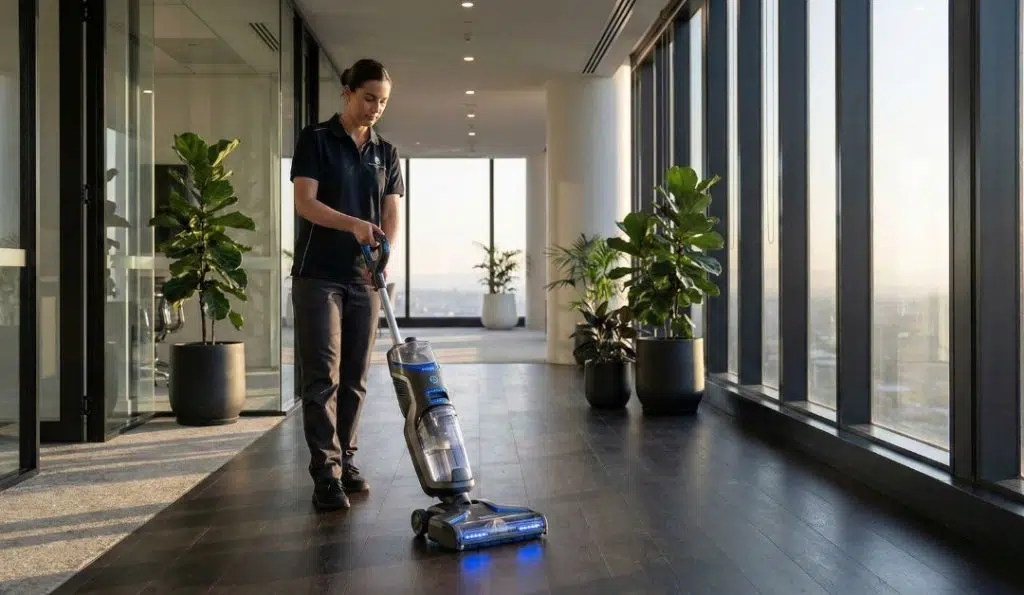
Australia’s commercial cleaning industry generated $20.1 billion in revenue in 2025-26, supported by more than 44,000 businesses nationwide. What’s changed? Approximately 80% of cleaning businesses along the east coast—particularly in New South Wales, Victoria, and Queensland—have now adopted eco-friendly practices, not as a marketing gimmick, but as a baseline requirement.
Four key drivers are making sustainable cleaning mandatory:
Regulatory Pressure is Increasing
The NSW Environmental Protection Authority (EPA) is tightening controls on cleaning products that impact air quality and waterways. From July 2026, businesses must comply with stricter volatile organic compound (VOC) limits under the Protection of the Environment Operations (Clean Air) Regulation 2022.
The NSW Plastics Plan 2.0 also phases out cleaning products containing microbeads and plastics that break into microplastics, which pollute waterways and contaminate recycling streams. Non-compliance can result in significant fines and clean-up notices.
Building Certification Requirements Have Evolved
From July 2026, the Commonwealth Government mandates that any office space valued over $15 million must obtain a minimum 4 Star Green Star certification. Green Star certified buildings must demonstrate sustainable operational practices—including cleaning services.
Similarly, properties with NABERS (National Australian Built Environment Rating System) ratings must maintain sustainable cleaning practices to preserve their star ratings. Loss of certification can impact property values, tenant satisfaction, and rental rates, with re-certification costs typically ranging from $15,000-$50,000 and taking 6-12 months.
Corporate ESG Commitments Extend to Contractors
Approximately 75% of ASX-listed companies have committed to net-zero emissions by 2030. These commitments now include Scope 3 emissions—which cover cleaning contractors and service providers. This means your cleaning company’s environmental practices directly impact your corporate sustainability reporting.
Supply chain sustainability audits are extending deeper into service providers, and businesses using non-compliant cleaning contractors risk failing their own ESG audits.
Post-Pandemic Health Priorities Remain High
Indoor air quality (IAQ) has become a critical workplace concern. Studies show that traditional cleaning chemicals release VOCs that linger in the air for hours or days, causing respiratory irritation, headaches, and reduced productivity. Modern eco-friendly products eliminate these risks while maintaining the heightened hygiene standards that emerged during the pandemic.
The Seven Non-Negotiable Sustainability Standards for 2026
These aren’t recommendations anymore—they’re requirements embedded in building codes, certification standards, and commercial contracts across NSW.
1. TGA-Approved, Biodegradable Cleaning Products
All cleaning agents must be registered with the Therapeutic Goods Administration (TGA) and formulated to biodegrade within 28 days. Products containing phosphates, chlorine bleach, or ammonia are being phased out of compliant facilities.
Good Environmental Choice Australia (GECA) certification has become the gold standard. GECA is Australia’s only member of the Global Ecolabelling Network and assesses products against 39 comprehensive sustainability criteria. The GECA ecolabel is recognised by Green Star, WELL, NABERS, and government procurement channels nationwide.
Why it matters: Chemical runoff from non-compliant cleaning products affects Sydney Harbour and waterways. Indoor air quality directly impacts employee health, with eco-friendly cleaning shown to improve IAQ by 60% and reduce sick days by 20%.
How to verify: Request Material Safety Data Sheets (MSDS) for all cleaning products used in your facility. Look for TGA registration numbers and GECA certification labels. If your current provider can’t produce these documents immediately, they’re likely not compliant.
2. Water Conservation Technology
NSW businesses face increasing pressure to reduce water consumption. Modern cleaning technology can cut water usage by 80% through dry steam cleaning, low-moisture methods, and microfiber systems.
Dry steam cleaners work at high temperatures (above 150°C) to sanitise and clean surfaces using minimal water—perfect for carpets, hard floors, and bathroom facilities. This technology can save 5,000-10,000 litres of water annually per commercial building.
3. Indoor Air Quality Protection
VOC limits are now strictly controlled. Cleaning products must contain less than 50 g/L of volatile organic compounds to meet government standards. HEPA (High-Efficiency Particulate Air) filtration is mandatory for cleaning equipment in schools, medical centres, and childcare facilities, capturing 99.97% of airborne particles.
Properties that fail to meet IAQ standards risk tenant complaints, health issues, and potential liability. Research indicates that poor indoor air quality can decrease worker performance by 10-30%.
4. Eco-Friendly Packaging and Supply Chain
The NSW Plastics Plan 2.0 introduces staged requirements between 2026-2030. Cleaning companies must transition to biodegradable or recyclable packaging and reduce single-use plastics. Concentrated cleaning formulas significantly reduce plastic packaging—by up to 90% compared to ready-to-use products.
5. Antimicrobial Solutions Without Harsh Chemicals
The global market for antimicrobial coatings reached $20.1 billion in 2026, up from $9.8 billion in 2020. Modern non-toxic antimicrobial solutions provide long-lasting protection for high-touch surfaces without relying on harsh chemicals.
Technologies like copper and silver-infused materials offer naturally antimicrobial properties, while electrostatic disinfection allows eco-friendly solutions to coat surfaces evenly and efficiently.
6. Digital Tracking and Transparency
Approximately 62% of commercial cleaning companies now use IoT-enabled tools to monitor service frequency, product usage, and environmental impact. Digital tracking provides the data businesses need for ESG reporting and demonstrates compliance during audits.
Real-time monitoring ensures cleaning services maintain quality standards while optimising resource usage and reducing waste.
7. Staff Training and Safe Product Handling
Proper training ensures eco-products are applied correctly, diluted accurately, and disposed of safely. Even environmentally friendly products require appropriate handling. Training reduces product waste by up to 40% and ensures compliance with Work Health and Safety regulations.
Industry-Specific Compliance Requirements
Different sectors face specific regulatory requirements beyond the baseline standards.
Healthcare and Medical Facilities must balance eco-friendly practices with infection control requirements. The Royal Australian College of General Practitioners (RACGP) sets guidelines that approved eco-products can meet without compromising on hospital-grade disinfection.
Childcare and Education facilities fall under the Australian Children’s Education & Care Quality Authority (ACECQA) National Quality Standards. Non-toxic, fragrance-free formulations are essential given children’s higher exposure risk and sensitivity to chemicals.
Food Service and Hospitality businesses must comply with HACCP (Hazard Analysis Critical Control Points) standards. Eco-friendly products are now available that meet food safety requirements while protecting the environment—suitable for kitchen surfaces, food preparation areas, and grease trap cleaning.
Corporate Offices and Commercial Buildings maintaining Green Star or NABERS ratings must demonstrate sustainable cleaning practices in their operational plans. Failure to do so can result in downgraded ratings and reduced property values.
How to Verify Your Cleaning Company Meets 2026 Standards
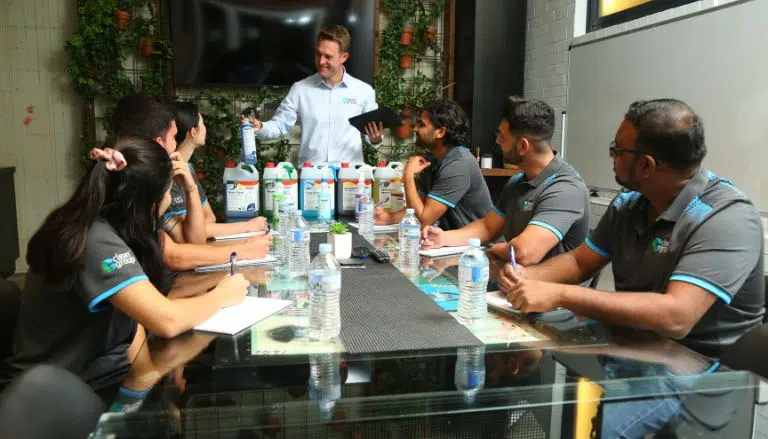
Use this checklist to assess your current cleaning provider:
Request complete product documentation including MSDS sheets, TGA registration numbers, and GECA certifications. Verify equipment standards like HEPA-filter vacuums, microfiber systems, and water-saving technology.
Review waste management practices including chemical disposal procedures, recycling protocols, and packaging reduction initiatives. Confirm staff training with certifications for eco-product application and safe handling procedures.
Check certifications such as ISO 14001 (Environmental Management), ISO 9001 (Quality Management), and ISO 45001 (Occupational Health & Safety). Industry-specific accreditations demonstrate specialised expertise.
Request performance data including water usage metrics, chemical consumption rates, and waste reduction statistics. Genuine eco-cleaning companies track and report these metrics routinely.
Red flags to watch for: Vague answers about products used, no documented certifications, resistance to providing MSDS sheets, or significantly cheaper pricing that suggests corners are being cut on eco-products.
Conclusion: The Time to Act is Now
Green cleaning has evolved from optional best practice to mandatory business requirement. NSW businesses face regulatory pressure, certification requirements, and client demands that make sustainable cleaning non-negotiable in 2026.
The seven sustainability standards outlined here represent the industry baseline. Non-compliance risks financial penalties, lost building certifications, failed ESG audits, and reputational damage.
Don’t wait for a compliance audit or certification loss to take action. Evaluate your current cleaning practices against 2026 standards today. Use the checklist provided to audit your provider, request comprehensive documentation, and compare the costs versus benefits of compliant eco-friendly cleaning.
The businesses already compliant are benefiting from cost savings, improved employee health, and competitive advantages. Those lagging behind face mounting risks and potential disruptions to operations.
Frequently Asked Questions
About the Author

Suji Siv
Hi, I'm Suji Siv, the founder, CEO, and Managing Director of Clean Group, bringing over 25 years of leadership and management experience to the company. As the driving force behind Clean Group’s growth, I oversee strategic planning, resource allocation, and operational excellence across all departments. I am deeply involved in team development and performance optimization through regular reviews and hands-on leadership.
Read More About Suji
 Get A Quote