A Complete Cleaning Guide for Childcare Center
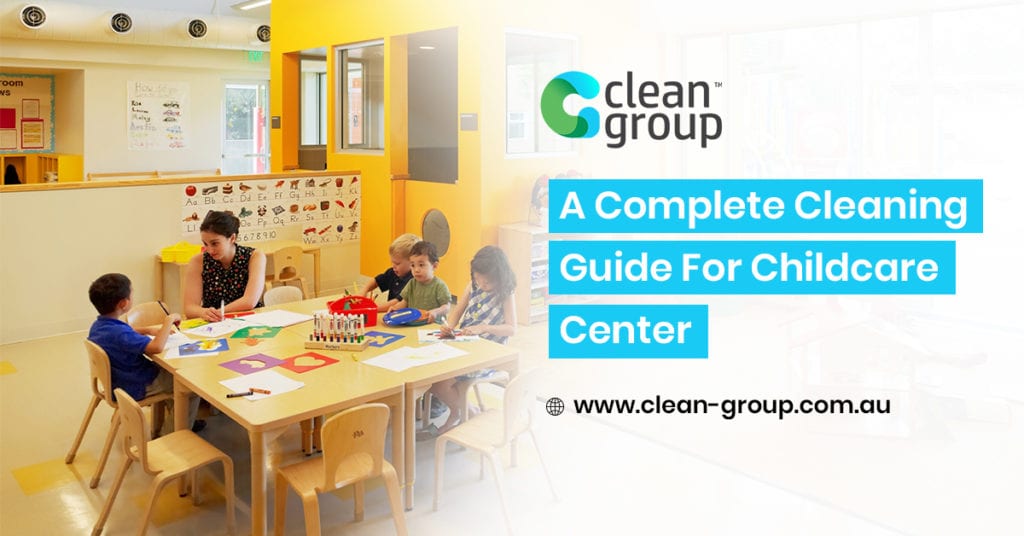
A childcare facility is a place for kids to learn, grow and make new friends. Unfortunately, this is also a place for kids to expose to germs and contagious diseases. Have no fear; you can definitely hire a childcare cleaning service like Clean Group to cover all of the things you need in providing a safe and healthy place for these young ones. We will teach you the ABC of safe and healthy childcare. childcare cleaning Our childcare centre cleaning team ensures top-quality results every time.
Seven Steps Cleanup and Disinfection for Childcare Center
Not everything that is dirty has a lot of germs like window sills and walls. But do not be fooled by appearances. Places like diaper tables and hands can be loaded with bacteria. That is why we will share with you the proper way of commercial cleaning and disinfecting. First, you clean and then you disinfect.
Childcare Cleaning removes dust, dirt, grease, and other foreign matter and germs by physically removing them off of the surface. A perfect example could be mopping the floors, scrubbing counters with water or soap and commercial cleaning chemicals.
Disinfecting kills all germs virtually. This can be done with the use of a particular chemical which is called disinfectants.
It is vital to disinfect things that are likely to have lots of germs. These are the surfaces that are likely to come in contact with blood, mucus, and urine.
How do you know when you are disinfecting? You use a particular chemical like bleach or any other product that is labelled as the disinfectant. Always remember that most cleaners are not disinfectants.
So please be sure that you are picking up the right chemical, saying that it is really indeed, a disinfectant. Read the directions on how to use it.
Cleaning is a dirty job, but someone has got to do it. Always remember that you are doing it for the welfare of the kids that are enrolled in these facilities. Most of the commercial cleaners out there do not spend enough time to do the job right.
- Block off your working area
- Use the right equipment, tools and cleaning chemicals
- Use rubber gloves
- Clean Up
- Disinfect
- Clean up after you are done with cleaning
- Wash up the gloves that you used in cleaning
Room-by-Room Cleaning Standards for Australian Childcare Centres
A comprehensive cleaning guide for childcare centres must address the distinct risk profiles of each room type rather than applying a uniform approach across the entire facility. The NHMRC Staying Healthy in Child Care guidelines (5th edition) and ACECQA Quality Area 3 assessment criteria both recognise that nursery rooms serving children under two years require more intensive cleaning protocols than preschool rooms, primarily because infants and young toddlers mouth objects, crawl on floors, and have the least developed immune responses. Centres engaging professional childcare centre cleaning in Sydney benefit from customised room-by-room cleaning specifications that align with these risk-based standards rather than generic commercial cleaning scopes.
| Room Type | Priority Cleaning Focus | Key Regulatory Standard |
|---|---|---|
| Nursery (0-2 years) | Cot mattresses, nappy change surfaces, mouthed toys, floor sanitisation | NHMRC two-step disinfection after every nappy change; Regulation 81 safe sleep |
| Toddler room (2-3 years) | Toilet training areas, sensory play materials, meal surfaces | NHMRC hand hygiene; FSANZ 3.2.2 food contact surfaces |
| Preschool room (3-5 years) | Art supply storage, shared equipment, bathroom facilities | ACECQA QA3 Element 3.1.2 premises maintenance |
| Kitchen | Food preparation surfaces, refrigerator temperature, waste bins | FSANZ Food Standards Code 3.2.2; NSW Food Authority inspections |
| Outdoor play areas | Equipment surfaces, sandpit hygiene, shade structure cleanliness | AS/NZS 4685 playground equipment safety; NHMRC outdoor guidelines |
Bloodborne Pathogen and Bodily Fluid Clean-Up Procedures
Every childcare centre cleaning guide must include specific procedures for handling blood and bodily fluid spills, which occur frequently in environments where young children experience nosebleeds, vomiting, toilet accidents, and minor injuries. The NHMRC classifies blood and bodily fluids as potentially infectious materials requiring standard precautions regardless of the child’s known health status. The clean-up procedure follows a strict sequence: isolate the area and remove children, don disposable gloves and a plastic apron, absorb visible matter with disposable cloths or paper towels, clean the surface with warm water and detergent, apply sodium hypochlorite solution at 1,000 parts per million for a minimum ten-minute contact time, dispose of all contaminated materials in a sealed plastic bag placed in a clinical waste bin, and perform hand hygiene immediately after removing gloves.
SafeWork NSW requires that all staff who may encounter blood or bodily fluids in their work role have access to a spill kit containing disposable gloves, absorbent granules or cloths, detergent sachets, sodium hypochlorite solution, sealable waste bags, and a plastic apron. The location of spill kits must be clearly signed and known to all staff members. Training in spill management procedures should form part of the induction process for all new employees and be refreshed annually as documented in staff records for ACECQA assessment purposes.
Pest Prevention Through Proactive Cleaning Practices
Pest management in childcare centres relies primarily on cleaning practices that eliminate the food sources, moisture, and harbourage points that attract cockroaches, ants, rodents, and stored-product insects. The NSW Food Authority requires food premises — including childcare kitchens — to take all practicable measures to prevent pest entry and infestation. Proactive cleaning measures include ensuring all food waste is removed from the building daily in sealed bags, wiping bench tops and sweeping floors after every meal service, storing dry goods in sealed containers with lids, fixing dripping taps and plumbing leaks that provide moisture sources, and sealing gaps around pipes and utility entries where pests enter the building.
Quarterly professional pest inspections with documented treatment records should be included in the centre’s maintenance schedule. Any pest sighting must trigger an immediate cleaning response in the affected area followed by a review of cleaning practices to identify the attractant. Centres that maintain pest-free environments through consistent cleaning demonstrate to ACECQA assessors that Quality Area 3 physical environment standards are embedded in daily operations rather than addressed reactively. For environmentally conscious approaches that complement pest prevention, our guide to green cleaning strategies for childcare centres covers product selection that minimises chemical exposure while maintaining hygiene standards.
How to Sanitize Toys
Did ever occur to you how does your commercial cleaner attend or clean the toys that the kids have in their mouth all the time? Most of the childcare workers use a disinfectant spray and directly shower the box of toys at the end of the day.
Some soak the toys in disinfectant, and they are done. We researched how to disinfect these toys effectively.
It is not wrong to spray Lysol directly into the box of toys, but this product can only sanitize at thirty seconds. Meaning, if we spray this, we need to keep the toys waiting for 30 seconds to sanitize. It will only kill a very minimal amount of germs.
If you are to use a particular product, make sure you use it the way the manufacturer designs it. The strength of the disinfectant strongly relies on its dwell time.
Most of the childcare facilities keep their toys in a box. We design our own box to use in the process. We devised a plastic box with holes surrounding it, and this is where we put all the toys that we intend to disinfect.
On another plastic box, we mix a disinfecting solution. We just have to submerge the box full of toys into this disinfecting solution. Once you are done with the dwell time, you can just simply take the box out and let the water drain. Let it air dry.
The critical thing is, you need to make sure that the toys are saturated or wet for the dwell time. You need to make sure that all of these products that you follow the instruction to achieve the best result.
Cleaning The Facility
Remembering the cleaning scope for a child care facility is a handful. Being organized is a continuous challenge for some. Hiring a professional commercial cleaner will help you ease the process. Most professional cleaners have a checklist that helps them stay on top of every task.
If you are a start-up cleaning business, you may download the cleaning sheet off of the internet. There are a lot of templates available for you to utilize.
You can also try and create your own by simply taking notes of the things that are needed to be carried out on a day to day basis.
There is already a lot to do when you open your daycare in the morning. With Clean Group, your morning cleaner is advised to ways to maintain cleanliness in a childcare centre :
- Prepare a pail of water mix with bleach. We also suggest that they write today’s date in the bucket to make sure that this solution is fresh.
- Stock the fridge with lunch and snacks
- Put out toys
- Set up the rooms
- Cleaning the Playroom
- Cleaning the Lunchroom
- Cleaning of Bathroom
- Floor, Rugs, Bedding, and Carpet Care
Following safety, regulation is one of the essential factors we need to follow every day.
In Closing Up, the Cleaner Is Also Task To:
- Mop
- General Cleaning
- Vacuuming
- Rubbish collection
There are also smaller cleanup jobs, but these vary from daycare to daycare so keep an eye out for the weak spots in your chores.
As much as the little things that make the house a home are the little details and extra care that will make your daycare go from okay to great. You can also download a free detailed checklist of all childcare cleaning and daycare cleaning duties.
Most of the time, it is always good to bring professionals to assist your daycare centre’s needs and give you tips for keeping it up to standard.
This can be sometimes costly; that is why we highly recommend that you collect a few cleaning quotes to compare price ranges.
The checklist takes care of your cleaning duties, so you can entirely focus on the kids and your daycare.
Why do Infections Spread Quickly In Child Care Area?
You are dealing with kids, and these kids are not yet conscious about what is dirty and what is needed to keep clean hygiene. These natural habits of children contribute a lot to spreading germs all over the place.
Also, some of the childcare facilities are under staff and employees may not have adequate hygiene training.
Frequently Asked Questions
What are the essential steps in a childcare centre cleaning routine?
The NHMRC recommends a structured approach: first remove visible soil and debris with detergent and water, then apply a TGA-registered disinfectant at the specified concentration and contact time. This two-step process applies to all high-risk surfaces including nappy change areas, bathrooms, and food preparation surfaces. General surfaces require daily cleaning with detergent, while high-touch areas need disinfection at least twice daily and more frequently during illness outbreaks.
How should a childcare centre clean up blood or vomit spills?
Isolate the area, don disposable gloves and apron, absorb visible matter with disposable cloths, clean with detergent and water, then disinfect with sodium hypochlorite at 1,000 parts per million for ten minutes contact time. Dispose of all contaminated materials in a sealed bag. Perform hand hygiene immediately after removing gloves. All staff should have access to a clearly signed spill kit and receive annual training in these procedures as required by SafeWork NSW.
What cleaning products should childcare centres avoid?
Avoid aerosol spray products that increase airborne chemical exposure, heavily fragranced products that trigger respiratory irritation in young children, and any product without a current Safety Data Sheet. Products making disinfection claims must be TGA-registered — unregistered products with antimicrobial claims are illegal to market in Australia. Never mix bleach with ammonia-based cleaners as this produces toxic chloramine gas. Store all chemicals in locked cabinets inaccessible to children per Regulation 106.
How do you clean sandpits in a childcare centre?
Rake sandpit sand daily to aerate and expose it to UV light, which has natural germicidal properties. Cover the sandpit overnight and whenever not in use to prevent animal access and contamination. Inspect daily for animal faeces, sharp objects, and foreign material. Replace sand every 12 months or immediately if contaminated with blood, vomit, or faeces. Ensure adequate drainage to prevent waterlogging, which promotes bacterial growth and mosquito breeding per NSW Health guidelines.
What cleaning documentation do ACECQA assessors check?
Assessors reviewing Quality Area 3 examine displayed cleaning schedules with daily sign-off records in each room, the chemical register with current Safety Data Sheets, staff infection control training records aligned with NHMRC guidelines, spill kit locations and contents, pest management records, and cleaning-related goals in the Quality Improvement Plan. Centres that maintain digital records with timestamps provide stronger evidence than handwritten logs during assessment visits.
About Clean Group
Clean Group is a Sydney-based commercial cleaning company providing specialist childcare centre cleaning services across New South Wales. Our teams are trained in ACECQA compliance requirements and follow NHMRC infection control guidelines. We use TGA-registered disinfectants and GECA-certified products to maintain the highest hygiene standards in early childhood education environments.
Phone: 02 9160 7469
Address: Suite 1B, 189 Kent Street, Sydney NSW 2000
Cleaning Tips on How to Fight the Spread of Germs
- It is essential that childcare controls the spread of germs and keeps every child safe from toxic chemicals. We can protect children by choosing more reliable products and using all chemicals carefully. Disinfecting, sanitizing, and cleaning are all different jobs.
- Applying soap and water, cleaning, and hand washing will eliminate most germs. Lots require more than just general cleaning in a few areas.
- Disinfectants are your most potent germ-fighting tool. They are mainly required in toilet and diaper areas. Disinfectant kills all germs.
- For food contact services and mouth objects, you will need sanitiser. Sanitisers are not as quite strong as disinfectant, but it reduces germs to a safe level.
- Household bleach is a standard sanitiser and disinfectant. It is a natural product, so it is easy to forget that it is toxic. A tiny amount of bleach in water is all you need. Using more bleach than is required is not good and creates unnecessary exposure and risks.
- Bleach breaks down quickly with water, so you will make your solution fresh for each day. A disinfectant is your most potent solution. Start with regular strength unscented bleach. For accuracy, you will need a measuring tool or a calibrated pump. Getting the concentration right is simpler when measuring in quartz rather than in gallons. Mix a tablespoon of bleach for quartz of cold water or a quarter cup per gallon.
- To make a sanitiser, mix a quarter teaspoon per quart or a full teaspoon per gallon. Test your sanitiser strength after mixing.
- Before using your solution, wash your surfaces with soap and rinse with water. Debris and soapy residue will interfere with killing the germs. Apply your solution from the bucket or use spray. Keep it away from your face and do not forget to ventilate your area and keep children out.
- Once applied, allow your surface to air dry. If you need it sooner, wait for two minutes and then wipe it dry. Remember, like all chemicals, store bleach in a safe place and away from children and food.
Childcare Cleaning Melbourne has been in business for two decades, and we had dealt with too many childcare centres. Big and small, they are both concerned about the welfare of the children.
This article right here will give you the basic knowledge on how to make your premise a safe and healthy place. Let us hear from you and drop us a comment below.
For more helpful insights, explore our guide on ways to maintain cleanliness childcare centre.
About the Author

Stephen Matthews
Hi, my name is Steve. I have been working as a Regional Operations Manager in Sydney Clean Group for almost four years now and manage a team of 10. I have more than three decades of experience in the commercial cleaning industry. My responsibilities include the day-to-day management of cleaning operations, planning, online quotation to clients, managing cleaners’ performance, collecting clients\' feedback, and ensuring proper & regular maintenance of cleaning equipment. Get in touch for a quick chat about your cleaning needs.
Read More About Stephen 0291607469
 Get A Quote