How to Improve Indoor Air Quality in the Workplace
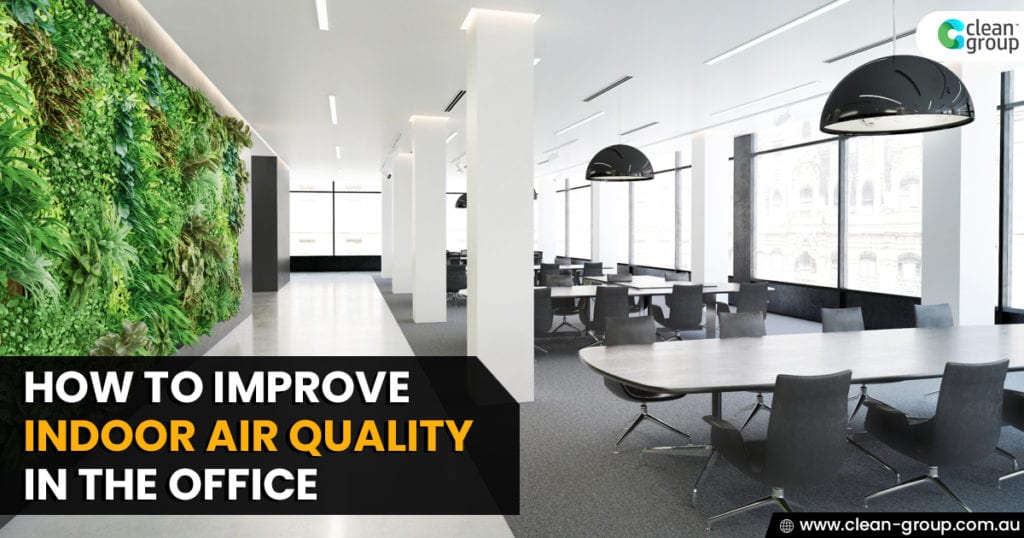
Poor air quality inside an office triggers a condition the U.S. Environmental Protection Agency (EPA) identified in its landmark 1989 report as Sick Building Syndrome (SBS). Employees develop headaches, coughing and respiratory irritation while at their desks, yet symptoms vanish once they leave the premises. The productivity cost is measurable — Safe Work Australia links sustained exposure to indoor pollutants with higher absenteeism and slower cognitive function across every sector. For expert results, trust office cleaning professionals to handle it right. Our office cleaning services team ensures top-quality results every time.
Australian workplaces must meet the ventilation benchmarks set out in AS 1668.2, which requires a minimum outdoor-air supply of 10 litres per second per person. When ambient temperature exceeds 27 °C, that figure rises to 15 L/s. Falling short of these thresholds concentrates carbon dioxide, volatile organic compounds (VOCs) and biological contaminants at levels that accelerate SBS symptoms.
Maximise Natural and Mechanical Ventilation
Air-conditioned offices keep windows sealed for temperature control, but opening them periodically flushes stale air and lowers CO₂ concentration. Where operable windows are unavailable, upgrading HVAC intake dampers or installing demand-controlled ventilation tied to CO₂ sensors achieves a similar result. SafeWork NSW recommends regular commissioning of mechanical systems to verify airflow rates match AS 1668.2 requirements.
Upgrade Filtration and Monitor Particulate Matter
Standard panel filters capture only large particles. Replacing them with MERV 13 rated media — or HEPA units in high-risk environments — traps fine particulate matter (PM2.5) that infiltrates buildings during bushfire season or from nearby traffic. Facilities pursuing a higher NABERS Indoor Environment rating often pair upgraded filtration with real-time PM2.5 and CO₂ monitoring dashboards so building managers can respond before occupant comfort drops.
Keep Furnishings and Soft Surfaces Dust-Free
Dust and biological allergens settle into carpet fibres, upholstered chairs and fabric partitions. Vacuuming with HEPA-filtered equipment at least twice a week removes surface-level particulates, while periodic hot-water extraction targets embedded soil and dust-mite colonies deeper in the pile. Professional carpet and upholstery technicians use truck-mounted extraction units that sustain water temperatures above 60 °C — high enough to neutralise most biological contaminants without chemical residue.
Control Humidity and Prevent Mould Growth
Maintaining relative humidity between 40 % and 60 % discourages mould proliferation while keeping mucous membranes comfortable. Damp zones around restrooms, kitchenettes and server rooms benefit from standalone dehumidifiers or dedicated exhaust fans vented to the exterior. Visible mould on grout, ceiling tiles or behind cabinetry should be remediated promptly — the National Health and Medical Research Council (NHMRC) advises that prolonged mould exposure contributes to asthma onset and chronic respiratory sensitisation.
Reduce VOC Sources at the Origin
Paints, adhesives, new furniture and certain printer toners off-gas volatile organic compounds that accumulate in sealed offices. Specifying low-VOC or zero-VOC products during fit-outs limits the chemical load at the source. For existing spaces, increasing the fresh-air fraction through the HVAC system dilutes residual VOC concentration. The Green Building Council of Australia’s Indoor Environment Quality credits reward tenancies that document VOC management as part of their Green Star rating submission.
Rethink Indoor Plants Carefully
Indoor greenery is widely promoted as a natural air purifier, yet research from Harvard T.H. Chan School of Public Health suggests the volume of foliage required to measurably reduce pollutants in a full-size office is impractical. Overwatered pots become breeding grounds for mould spores that worsen the very symptoms plants are supposed to relieve. If your workplace includes indoor plants, check soil and saucers weekly for mould, and position pots away from air-return grilles to prevent spore circulation through the HVAC ductwork.
Schedule Professional Maintenance and Audits
A structured maintenance calendar ensures filters are replaced every 90 days, ductwork is inspected annually for microbial growth, and air-handling units receive coil treatment each season. Independent indoor-air-quality audits — measuring CO₂, PM2.5, formaldehyde and total VOCs against the Workplace Exposure Standards published by Safe Work Australia — give facility managers objective data to benchmark improvements and satisfy WHS Act 2011 obligations.
Improving workplace air quality does not require a full mechanical overhaul. Consistent maintenance, better filtration and smarter ventilation controls deliver measurable gains in occupant health and productivity. Clean Group’s commercial teams combine HEPA-grade vacuuming, surface sanitation and ductwork hygiene programs tailored to Sydney office environments — so your workforce breathes easier without disrupting daily operations.
For more helpful insights, explore our guide on clean workplace equipment guide.
About the Author

Stephen Matthews
Hi, my name is Steve. I have been working as a Regional Operations Manager in Sydney Clean Group for almost four years now and manage a team of 10. I have more than three decades of experience in the commercial cleaning industry. My responsibilities include the day-to-day management of cleaning operations, planning, online quotation to clients, managing cleaners’ performance, collecting clients\' feedback, and ensuring proper & regular maintenance of cleaning equipment. Get in touch for a quick chat about your cleaning needs.
Read More About Stephen 0291607469
 Get A Quote