How to Write a Cleaning Business Plan in Australia [Template Guide]
A cleaning business plan is the foundation document that maps your path from startup to profitability — covering financial projections, market analysis, legal compliance, and operational strategy. Our office cleaners team has helped hundreds of operators across Sydney build sustainable cleaning businesses, and this guide distils the essential components every plan needs.
Whether you are launching a new commercial cleaning company or restructuring an existing operation, a well-crafted business plan serves two purposes: it forces you to validate your assumptions with real numbers, and it provides the documentation lenders, investors, and commercial clients expect before signing contracts.
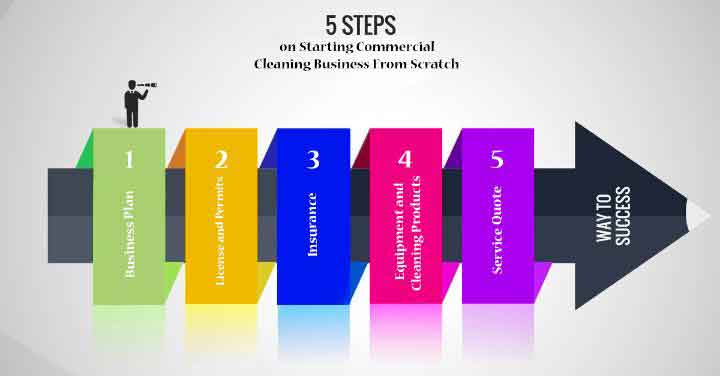
1. Define Your Cleaning Business Model
The very first thing you have to decide upon is the type of cleaning business you would want to start. Don’t start with a spectrum of cleaning services; instead, start with just one or two major services. This way you can gain expertise on the core services that you decide to provide and then can add other services later on.
Not only this, but it would also help you in saving on the initial start-up costs and get a good grip on business systems and processes. You can easily add additional services when you have expanded your business.
2. Licences and Permits
This would be your very next step – to get proper permits for your cleaning business. Before you start your business, you will need to determine whether you want to get registered as a company or a sole trader or as a partner and apply for an ABN (Australian Business Number).
After you register yourself for your ABN, you have to register a business name through ASIC (Australian Securities and Investments Commission) and then set up a business bank account. Obtain a business tax registration certificate from the ATO and if you are planning to hire commercial cleaners, register for PAYG withholding and Single Touch Payroll (STP) reporting.
3. Insurance
Business insurance and surety bonding will provide you with coverage when it comes to any kind of property damage as well as for commercial cleaners in some particular states.
You can use this aspect for marketing your business as it will give confidence and assurance to your prospective clients that you are insured and bonded.
Even if your clients don’t need it, you should not take the chance of not going insured or bonded because you will be held accountable for any kind of accident or theft that happens on the site grounds.
Take appropriate legal measures when you are hiring employees for your business as not doing so can lead to penalties under the Fair Work Act 2009.
Never take up any work assignment without employing your written contract. Your business contract will protect you in the case of any difference of opinion between you and your client.
4. Equipment and Hygiene Products
When buying new equipment and hygiene products, keep in mind that you have to consider your type of cleaning business and buy accordingly. The basic sanitation products and equipment include a vacuum, cleaning towels, squeegees, buckets, cleaning chemicals, trash bags, etc.
5. Service Pricing and Quoting
When you are deciding upon your service quote, remember that you should not keep it too high or too low that your clients find it difficult to trust you.
Once you have made some loyal clients and they believe that you offer quality service, they will even get ready to pay more for your maintenance services.
Financial Projections and Startup Cost Breakdown
A cleaning business plan requires a detailed financial section covering startup costs, projected revenue, and a realistic break-even timeline. In Australia, initial setup costs for a small commercial cleaning operation typically range from $5,000 to $30,000 depending on the scope of services offered.
Core startup expenses include ABN registration through the Australian Business Register (free via the ATO), public liability insurance ($400–$1,200 per year for $10–$20 million cover), workers compensation insurance as required under each state’s Workers Compensation Act, cleaning equipment and chemical supplies, a reliable vehicle, and marketing materials. Operators planning to employ staff must also register for PAYG withholding and Single Touch Payroll (STP) reporting through the ATO.
Revenue projections should be built on realistic hourly rates. The Cleaning Services Award 2020 (MA000022) sets the base rate for a Level 1 cleaning employee at approximately $24.73 per hour. Most commercial cleaning businesses charge clients between $35 and $65 per hour depending on the service type, location, and complexity. The margin between labour cost and charge-out rate determines gross profit.
Break-even analysis is critical for securing finance from lenders or investors. A sole operator charging $50 per hour and working 30 billable hours per week generates approximately $78,000 in annual revenue. After deducting insurance, vehicle costs, supplies, and GST obligations, net profit typically ranges from $45,000 to $55,000 in the first year. Include a month-by-month cash flow forecast for the first 12 months to demonstrate viability — most Australian banks and the Australian Small Business and Family Enterprise Ombudsman recommend this format.
| Expense Category | Estimated Cost (AUD) | Notes |
|---|---|---|
| ABN Registration | Free | Via Australian Business Register |
| Business Name Registration | $39–$79 | Via ASIC (1–3 year terms) |
| Public Liability Insurance | $400–$1,200/year | $10–$20 million cover standard |
| Workers Compensation | Varies by state | Compulsory if employing staff |
| Equipment & Supplies | $2,000–$8,000 | Vacuum, chemicals, PPE, tools |
| Vehicle | $5,000–$15,000 | Second-hand van or ute |
| Marketing & Website | $500–$3,000 | Business cards, Google Business Profile, basic website |
Market Analysis and Competitive Positioning
Every cleaning business plan needs a market analysis section that quantifies the opportunity and identifies a defensible niche. IBISWorld estimates the Australian commercial cleaning services industry generates over $12 billion in annual revenue, with steady growth driven by outsourcing trends across office, retail, healthcare, and strata sectors.
Start with a geographic focus. If targeting Sydney, analyse the number of commercial premises in your chosen area using ABS (Australian Bureau of Statistics) business counts data. Identify the dominant competitors — large national operators like ISS Facility Services, Broadspectrum, and Spotless — and define how a smaller operator can compete on responsiveness, specialisation, or service quality.
Common differentiation strategies include specialising in a single vertical such as strata cleaning, childcare centres (regulated by ACECQA under the National Quality Standard), or medical facilities (requiring compliance with AS/NZS 3816 for clinical waste). Eco-certified services using GECA-approved products also command premium pricing, particularly for NABERS-rated buildings and Green Star facilities assessed by the Green Building Council of Australia.
The competitive positioning section should also address client acquisition strategy. Commercial cleaning contracts in Australia are typically won through direct outreach to property managers, tender responses for strata schemes and government buildings, and referrals. Document your planned marketing channels, estimated cost per lead, and conversion rate assumptions. A well-structured business plan maps the path from initial prospecting through to signed service agreements.
Essential Legal Agreements and Compliance Framework
A cleaning business plan should outline the legal documents and compliance obligations required to operate lawfully in Australia. Without a clear compliance framework, the business carries significant financial and regulatory risk.
The most critical document is a Cleaning Service Agreement — a contract between the cleaning company and each client that specifies scope of work, frequency, pricing, payment terms, termination clauses, and liability limitations. Each agreement should reference the relevant WHS obligations under the Work Health and Safety Act 2011 and specify which party is responsible for providing Safety Data Sheets (SDS) for chemicals used on site.
If hiring employees, the business must comply with the Fair Work Act 2009, including the Cleaning Services Award 2020 (MA000022) for minimum pay rates, penalty rates, overtime, and leave entitlements. Independent contractor arrangements require a separate Contractor Agreement, and operators must ensure the relationship genuinely meets the ATO’s contractor vs employee test to avoid sham contracting penalties enforced by the Fair Work Ombudsman.
Additional documents include a Workplace Health and Safety Policy, Safe Work Method Statements (SWMS) for high-risk tasks such as working at heights or handling hazardous chemicals registered with the TGA (Therapeutic Goods Administration), a Privacy Policy compliant with the Australian Privacy Principles under the Privacy Act 1988, and current certificates of currency for public liability and workers compensation insurance. The business plan should list each document, its purpose, and a timeline for completion before accepting the first client contract.
The above steps form the essential foundation of any cleaning business plan in Australia. Following this framework — from defining your business model through to financial modelling and legal compliance — gives lenders, partners, and prospective clients confidence that the operation is built on solid commercial ground.
Frequently Asked Questions
How much does it cost to start a cleaning business in Australia?
Startup costs for a cleaning business in Australia range from $5,000 for a sole operator offering basic residential services to $30,000 or more for a commercial operation requiring specialised equipment, a vehicle, insurance, and initial marketing. Key expenses include ABN registration (free through the ATO), public liability insurance ($400–$1,200 per year), workers compensation insurance, cleaning chemicals and equipment, and a vehicle. GST registration through the ATO becomes mandatory once annual turnover exceeds $75,000.
Do I need an ABN and GST registration to start a cleaning business?
Yes. Every cleaning business in Australia requires an Australian Business Number (ABN), which is free to register through the Australian Business Register. GST registration through the ATO becomes compulsory once your annual turnover reaches $75,000. Even below that threshold, voluntary GST registration allows you to claim input tax credits on business purchases and signals legitimacy to commercial clients who expect GST-inclusive invoicing.
What insurance does a cleaning business need in Australia?
At minimum, a cleaning business needs public liability insurance (typically $10–$20 million cover) and workers compensation insurance if employing staff — this is compulsory in every Australian state and territory under respective Workers Compensation Acts. Professional indemnity insurance is recommended for businesses providing consulting or management services. Many commercial clients and strata managers require current certificates of currency before awarding contracts.
How should I price cleaning services in my business plan?
Pricing in a cleaning business plan should reflect your labour costs, overhead, and target profit margin. The Cleaning Services Award 2020 (MA000022) sets the minimum base rate for a Level 1 cleaner at approximately $24.73 per hour, with penalty rates for evenings, weekends, and public holidays. Most commercial cleaning operators charge clients between $35 and $65 per hour. Your business plan should include a pricing table showing charge-out rates by service type, estimated hours per contract, and projected monthly revenue to demonstrate financial viability.
What legal documents do I need before starting a cleaning business?
Before taking on clients, you need a Cleaning Service Agreement (contract), a Workplace Health and Safety Policy compliant with the WHS Act 2011, Safe Work Method Statements (SWMS) for high-risk tasks, and a Privacy Policy compliant with the Privacy Act 1988. If hiring employees, you must comply with the Fair Work Act 2009 and the Cleaning Services Award 2020. If engaging subcontractors, a Contractor Agreement is required. Public liability and workers compensation certificates of currency are standard requirements for winning commercial cleaning contracts in Australia.
For more helpful insights, explore our guide on Workplace Cleaning Jobs in Australia.
About the Author

Suji Siv
/


Hi, I'm Suji Siv, the founder, CEO, and Managing Director of Clean Group, bringing over 25 years of leadership and management experience to the company. As the driving force behind Clean Group’s growth, I oversee strategic planning, resource allocation, and operational excellence across all departments. I am deeply involved in team development and performance optimization through regular reviews and hands-on leadership.
Read More About Suji 0291607469
 Get A Quote